


Effective ways to improve customer satisfaction
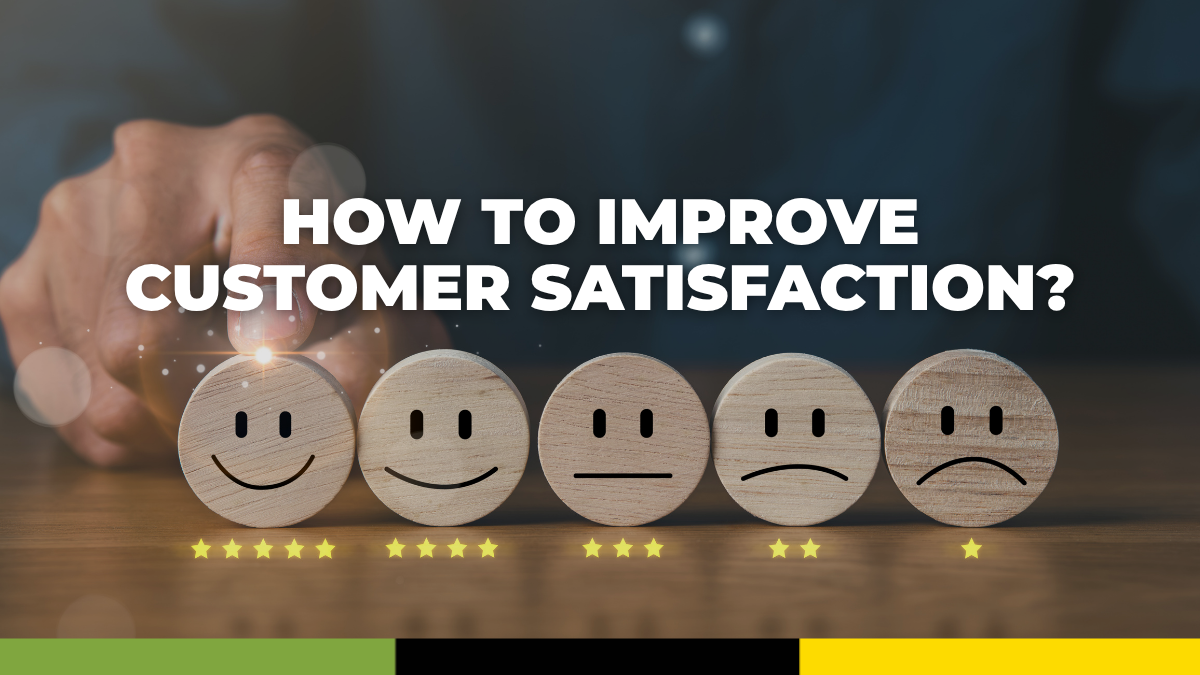
Today, consumers have access to a vast spectrum of products and services on the market. This endless choice breeds ever-higher expectations for companies and dictates what they expect from your business. As a result, providing great customer service plays a critical role on every B2C company’s path to success. Ultimately, the quality of those customer contacts is what determines whether a client remains loyal to your brand or defects to the competition.
One of the most popular tools used for customer support is the contact center. How exactly do contact center services increase customer satisfaction? Before we dive into the most effective strategies to improve customer satisfaction, let us first explain why positive reviews and satisfaction levels are so vital for your brand right from the very first call.
Measuring customer satisfaction – why is it so important?
Tracking this metric is incredibly important for several reasons, with customer retention being chief among them. Satisfied customers are far more likely to remain loyal to a company or brand. When individuals enjoy a high satisfaction level with a business’s products or services, they are much more inclined to make repeat purchases and continue doing business with them in the future.
It also directly encourages them to leave positive reviews and recommend your brand to friends, family, or others online. This can immediately drive sales growth and help you acquire new business while expanding your customer base. Furthermore, positive ratings are a key factor in building a brand’s reputation, whereas a high customer churn rate can easily and quickly ruin it.
Relying on customer satisfaction measurements also provides business management with invaluable feedback and insights for operational improvement and continuous growth. The valuable satisfaction data gathered from customer surveys can shed light on the effectiveness of a company’s initiatives, helping guide commercial decisions and refine marketing strategies. This allows companies to align their actions with the needs of the audience, utilizing this data as a core business strategy to strengthen their market position.
However, keep in mind that to effectively leverage both positive and negative feedback, you must understand the right methodologies to measure your customers’ sentiment and conduct these assessments properly.
Learn more: Customer Service Quality impact on Sales
How to measure customer service satisfaction
Let’s start with what customer satisfaction actually is. It refers to a customer’s level of enjoyment, the overall fulfillment of their needs, and the baseline level of customer satisfaction they feel toward a product, service, or brand. It is a subjective feeling that stems from a customer comparing their prior expectations with their actual, real-world experiences. Fulfilling these needs directly impacts customer loyalty, repeat purchases, word-of-mouth recommendations, brand image, and market positioning.
Net Promoter Score
There are several ways to gauge the current level of customer satisfaction. The most popular method to collect customer feedback is conducting Net Promoter Score (NPS) surveys. This approach involves asking closed-ended questions based on a numerical rating scale from 0 to 10. The highest ratings (values of 9–10) represent customers who are highly likely to recommend the company, known as “promoters.” Conversely, the lowest ratings (values of 0–6) define “detractors” individuals who criticize the brand and are inclined to discourage others from using its services. The intermediate group (values of 7–8) consists of “passives” – customers who are neutral toward the company and can easily change their customer satisfaction levels based on future experiences. These customer satisfaction surveys can be distributed electronically, via mail, or through follow-up phone calls inviting customers to rate their experience. The questions can target various aspects of the interaction, such as speed of assistance, staff competence, understanding of the issue, accuracy of the proposed solution, and how the customer feels overall during the employee touchpoint. Sample questions include: “How likely are you to recommend our services to a friend or colleague?” or “How would you rate the customer service at our location?”
Customer Satisfaction Score
The CSAT score (Customer Satisfaction score) provides insight into the level of positive experiences regarding specific aspects of your business. It can be used to track and benchmark performance over time to determine whether your scores are trending upward or downward. Additionally, it serves as an effective tool to identify areas for improvement and evaluate the success of initiatives taken to elevate standards across your company.Another popular approach is gathering feedback published across various online platforms, forums, and social media channels. Analyzing customer complaints and support tickets can help you identify weak spots and recurring issues. Based on these findings, companies can take action to effectively monitor team performance and implement targeted action plans to improve client satisfaction.
Retention rate
Undoubtedly, one of the clearest indicators of whether customers are satisfied with your services is whether they return to your business. They may not want to or have the time to fill out surveys, but if they choose to interact with your company again throughout the customer journey, it is a highly positive signal. In this context, you can track metrics like Average Revenue Per Customer (ARPC), retention rate, and Customer Lifetime Value (CLV). Evaluating these rates and customer satisfaction metrics together is an excellent way to gauge overall business performance.
What are the Key Performance Indicators (KPIs) for call center efficiency and effectiveness?
That makes perfect sense, but how exactly can a contact center department help you improve customer retention? High-performing customer service teams have a massive influence on how customers view a company, as they manage critical touchpoints throughout the customer journey. Because of this, measuring effectiveness – specifically, how well the contact center handles support – is critical. This requires establishing customer service metrics. While key performance indicators in a contact center can vary depending on the industry and specific business goals, the most critical metrics include:
- FCR (First Call Resolution): Do customers have to call multiple times for the same issue? FCR is a metric that shows the percentage of issues resolved during a customer’s very first interaction with an agent. It measures the proportion of cases that were completely handled on the first try, without requiring a transfer or a follow-up contact. A higher first-contact resolution rate indicates that agents are highly effective at solving customer problems.
- SL (Service Level): Measures queue performance and defines the percentage of calls answered within a specified timeframe. For example, an 80/20 service level means that 80% of calls should be answered within 20 seconds. A higher percentage is viewed as more efficient and better at meeting customer expectations.
- Abandoned Call Rate: Refers to the percentage of calls disconnected by the caller before being answered by an agent. A high abandonment rate can suggest issues with wait times, low operational efficiency, or insufficient agent availability.
- Answered Call Rate: A metric that shows the number of answered calls relative to unanswered ones. This parameter is critical because it helps assess a call center’s capacity to effectively handle inbound call volume.
Learn more: Call Center – What is it and why is it important for your business?
Which contact center solutions improve customer satisfaction?
There are many contact center solutions that can enhance the customer experience and increase their satisfaction.
Multichannel communication
One of the best ways to achieve this is through multichannel communication. By giving customers the option to connect through various channels – such as phone, email, chat, or social media – you allow them to choose their preferred method of contact. This increases flexibility while adapting to the communication preferences of your audience. Such a solution helps build an image of a company that meets expectations, ensuring that when callers reach out, they can quickly get an answer to their question.
IVR
Speaking of getting efficient help, we can’t forget about customer service automation through tools like Interactive Voice Response (IVR) systems or chatbots. This kind of solution can effectively speed up and streamline support processes. When properly designed and implemented, they can provide quick and effective assistance to customers – especially for simple questions and inquiries at the initial automated greeting stage.
Customer experience and employee experience
Another solution is offering a personalized customer service experience. Delivering a tailored experience is key to customer satisfaction. CRM (Customer Relationship Management) systems can help customer service agents access caller information, interaction history, and customer data, allowing them to better understand and serve customer needs. When a phone agent can review contact history and demonstrate knowledge of a reported issue, it builds trust and brand loyalty.
Undeniably, customer satisfaction is heavily influenced by how they are treated. The majority of customers say that whether the representative was nice and polite, spoke clearly and fluently, listened without interrupting, and had the expertise to provide answers makes a huge difference and serves to make them feel valued. Aspects like tone of voice, diction, and the pace and style of delivery are also crucial to how the caller feels. That is why it is essential to provide opportunities for employee development and systematic training to improve agent competencies. Improving communication skills and problem-solving contributes to a better customer service experience and has a direct impact on how your business is perceived.
System integration and quality control
System integration – effectively connecting various systems like CRMs, knowledge bases, phone systems, and online chat – can streamline the flow of information. This enables agents to provide customers with faster, more accurate answers. Storing information about the caller and their previous inquiries helps foster and maintain positive relationships with every customer.
Finally, regularly monitoring call and performance quality is an industry best practice. Performance evaluations and giving regular feedback to employees allow for continuous improvement in overall service quality.
Why is it worth focusing on customer satisfaction?
Focusing on meeting customer needs offers many benefits associated with improving customer satisfaction for a company. So, why is it worth dedicating attention to this topic?
One of the biggest advantages of optimizing your customer satisfaction index is an increase in customer loyalty, which directly drives repeat business or referrals. In this way, you position your business securely in the market and boost its revenue.
Satisfied customers are more likely to spend more money and buy additional products or services from a company. They are also less susceptible to competitor actions; strong customer relationships and positive experiences make it much harder for competitors to win over your clients.
What do customers do when they experience bad customer service in a contact center?
Typical reactions from a disappointed customer include filing a complaint about the service level and leaving negative feedback or reviews about the company or their call center experience. It is worth keeping in mind that failing to meet expectations and causing disappointment can result in them switching providers, which means a lost customer for you and an immediate increase in customer churn.
What Is the Average Churn Rate?
The metric, also known as the churn rate, can vary depending on the industry and the specific company. It measures the percentage of customers who stopped using a company’s products or services over a given period of time.
On average, about 25–30% of people leave your mailing list or database every year – so it is important for the growth rate of new leads to outpace this number. This can look different across various industries and companies. For example, it might be higher in sectors like telecommunications or internet services, while it could be lower in other sectors such as finance or software.
5 Proven Ways to Boost Customer Satisfaction in the Call Center
1. Focus on ongoing staff training and employee development
This is crucial to delivering the best possible service to your customers. You need to focus not only on hard knowledge and technical skills, but also on communication training so your staff can show empathy, manage conflicts, and understand customer needs. Well-trained staff will be able to respond more effectively to customer demands and ensure customer satisfaction.
2. Monitor quality and satisfaction metrics
Regularly tracking your audience through the use of customer satisfaction surveys discussed in this article will allow you to identify areas that need work. Conduct call monitoring sessions and provide feedback to your agents. This will help them refine their skills and adapt to the needs of your company’s audience.
3. Optimize performance and reduce wait times
Measure workplace efficiency and performance to assess whether you have enough staffing resources. Understaffing or an inefficient team will increase average wait times, leading to customer frustration. Implement strategies to help reduce customer effort, such as optimizing schedules, increasing the number of available agents, or deploying automation like Interactive Voice Response (IVR) systems.
4. Make self-service easy for customers
Some customers prefer to solve their problems on their own. That is why it is important to provide easy access to self-service channels like websites, mobile apps, knowledge bases, and frequently asked questions (FAQs). Make sure these resources are well-organized, intuitive, and easy to use.
5. Leverage data to refine your strategy
Gather customer feedback and insights, and use them to elevate the service standards in your contact center. When you spot a recurring issue, take immediate action to address any issues that arise. Take what your audience needs into account and proactively meet them halfway to improve your customer satisfaction.
Learn more: Customer Service Standards on the phone – 8 Golden Rules for increasing customer experience
How is AI improving call center customer service quality?
Artificial intelligence is playing an increasingly vital role in the contact center industry and can significantly contribute to new ways to improve customer satisfaction. Interestingly, data from PwC shows that a whopping 75% of consumers still prefer interacting with a live person rather than an intelligent robot. In fact, up to 56% of people might refuse to cooperate and just hang up if they hear an automated greeting instead of a human being after connecting.
Artificial intelligence (AI) can be used to automate various tasks and workflows in the call center to streamline certain processes. This allows agents to focus on more complex issues, while simple, routine tasks can be assisted by AI systems to improve the customer experience.
AI is also capable of analyzing customer needs, allowing the system to automatically play a specific voice prompt or route the caller to a different department, thereby streamlining hotline operations. What’s more, AI can be used to build chatbots and automated response systems for live chat channels.
Artificial intelligence can also be used for call center quality monitoring, allowing you to easily use customer satisfaction insights to improve client onboarding and retention. With this type of solution, a company doesn’t need to hire dedicated staff to oversee contact center operations, while simultaneously boosting the overall customer satisfaction score. Software like Ender Turing converts voice tracks into text, highlights the most critical parts of conversations, and generates pre-filled monitoring scorecards for them, looking specifically for customer stories that highlight operational success.
Contact center services play a crucial role in shaping positive customer perceptions
In summary, contact center services play a crucial role in shaping positive customer perceptions by delivering high-quality support, reducing wait times, resolving issues effectively, personalizing interactions, and providing access to multiple communication channels. Because of this, the contact center can significantly impact the overall customer journey.
Through continuous process improvement, employee skill development, the use of modern technology, data analysis, and responsiveness to customer needs, the contact center can become more than just a customer touchpoint. It can evolve into a powerful tool for driving retention among existing clients, deploying effective customer satisfaction strategies, and building a competitive advantage in the market.
Investing in the development of contact center services is highly worthwhile to transform them into centers of customer service excellence and build lasting relationships. Regardless of the industry, contact centers play a vital role in building a positive brand image and creating long-term value for both customers and the enterprise.
Thus, in striving to deliver an exceptional customer experience, contact center services play a crucial role in driving customer satisfaction and achieving success in today’s competitive business environment.
Turn customer relationships into long-term profit – partner with CCIG Group
Satisfied customers are more likely to return and recommend your brand or company to others. Businesses should view contact center services as a strategic investment that yields long-term benefits. Improving service leads to higher customer satisfaction and brand loyalty, which ultimately translates into increased profitability and business success.


